
Everyday logging
How to track calories without weighing every meal
You’re having lunch away from home. There’s no kitchen scale, you didn’t cook the food, and “one bowl” could mean almost anything. You can still keep a useful record if you’re clear about what you know and what you’re guessing.
The short answer
Start with package or restaurant nutrition information when it matches your food. Otherwise record familiar portions, the preparation, and any sauces or extras. Treat the calorie total as an estimate; a more detailed description helps explain a meal without turning it into a measurement.
Separate what you know from what you can only estimate
A useful meal note has room for uncertainty. Instead of trying to make every part equally precise, separate the information into what’s known, what you can describe, and what’s missing.
- Known: two slices of a labeled bread, a whole yogurt pot, or a restaurant’s named menu item.
- Described: a shallow bowl of cooked rice, a grilled chicken breast, or dressing served on the side.
- Missing: the oil in the pan, the recipe for a sauce, or the weight of a piece of meat.
Those categories tell you which parts of an estimate you could check later. They also keep a calorie total from looking more certain than the information behind it.
Use the label before estimating the food by eye
A packaged food often gives you a starting point without any weighing. Check both the calories per serving and the number of servings in the container. A pot, bottle or packet isn’t automatically one serving. FDA reference.
Here’s an illustrative example: suppose a yogurt label lists 120 kcal per 100 g and the pot contains 150 g. Eating the whole pot means 120 × 1.5 = 180 kcal. You don’t need a scale because the package states the amount.
If you eat half a labeled packet, multiply its whole-packet value by one half. If you estimate the fraction, record that too. The arithmetic can be exact even when your estimate of the fraction isn’t.
Make your usual bowl a reference, not a universal unit
“A bowl of rice” becomes more informative when you know which bowl and roughly how full it was. If you want to, measure a familiar bowl or spoon once at home, then use it as a reference on other days. NIDDK describes learning typical portion sizes without needing to measure everything indefinitely. Portion guidance.
Use a level measuring cup or a labeled container when one is available. Write “about one cup of cooked rice” rather than switching between “one serving,” “a bowl” and “a handful” for the same food.
Hands and household bowls vary, as do the foods placed in them. We don’t assign a fixed gram or calorie value to “a palm” or “a fist.” They can help you describe size, but they aren’t calibrated nutrition measures.
If you’re cooking a shared dish, dividing it into similar containers can give you an approximate fraction of the batch. The homemade-food guide explains where that method works and where uneven ingredients make it less useful.
Write the details that change the interpretation
A longer description isn’t automatically better. The useful additions are the ones that distinguish the meal you ate from another version of it.
| Meal note | What the description tells you |
|---|---|
| Chicken and rice | The main foods, with the amount and preparation missing. |
| Grilled chicken, about a cup of cooked rice | A preparation method and a rough rice portion. |
| Grilled chicken, about a cup of cooked rice, side salad, dressing on the side; used about half | The side dish and what happened to the dressing. Chicken size and cooking oil are still uncertain. |
These are writing examples, not outputs from a CalFood benchmark. No particular calorie total follows from them. A cup estimate can be wrong, and a description can still leave important ingredients out.
Record drinks and toppings too. “Coffee” leaves milk and sugar unresolved; “black coffee” and “latte with whole milk” describe different drinks. For anything poured or spread, write the amount you know or say that it’s uncertain.
At a restaurant, look for information that matches your order
If the restaurant publishes nutrition information, check the item, size and customizations before using it. The standard item may not include the extra sauce, different side or larger drink you ordered. NIDDK suggests checking calorie information on menus when it’s available. Restaurant portion guidance.
For a meal with no published information, keep a description of its components and preparation. Ask about ingredients if that’s useful and practical. Otherwise accept that the oil, recipe and portion may remain unknown.
There’s no reliable blanket rule here that turns a home-cooked meal into a restaurant meal by adding a fixed percentage. Use the information for the food you actually ate, and leave the rest as an estimate.
Use AI as an estimate with context
CalFood lets you write a meal in your own words and returns estimated calories and macros. Give it the portions and preparation details you know, then review its food items and breakdown. You can read more about the method and its limitations.
A photo may help record what a meal looked like, but it can’t establish a hidden recipe or measure an ingredient’s weight. A detailed note has limits too. Don’t treat a tidy number as proof that the app knew something you didn’t tell it.
For a meal you cook regularly, keep the ingredient list and portion information somewhere you can reuse it. That record gives you context the next time you log the dish, even if you don’t weigh it again.
Know when an estimate isn’t enough
This guide is about keeping a general food diary. If amounts affect a medical decision or a clinician-directed eating plan, ask your healthcare professional which measurements and tools to use. An AI meal estimate or an eyeballed portion isn’t a substitute for that advice.
If tracking food becomes distressing or makes eating harder, pause and seek support from a qualified professional. There’s no need to turn an uncertain lunch into a precise-looking number at the expense of your well-being.
What should I record for my next meal?
Write the food, its preparation, the portion you can describe, and the extras you remember. Use a label when it applies. Mark the things you don’t know, then keep the note as an honest record of the meal.
Sources & editorial notes
Written by CalFood, the team building the app. The calculations and meal descriptions in this guide are educational examples; they don’t establish the nutritional content of your own food or validate an app’s accuracy.
- How to understand and use the Nutrition Facts label
U.S. Food and Drug Administration. Serving sizes, calories per serving, and scaling label values to the amount eaten.
- Food portions: choosing just enough for you
National Institute of Diabetes and Digestive and Kidney Diseases. The difference between a portion and a label serving, food records, and learning the sizes of familiar portions.
For personal nutrition or medical decisions, consult a qualified health professional. Found an error? Let us know so we can check the source and correct the guide.
A food diary, in your own words
Keep the meal.
And the details.
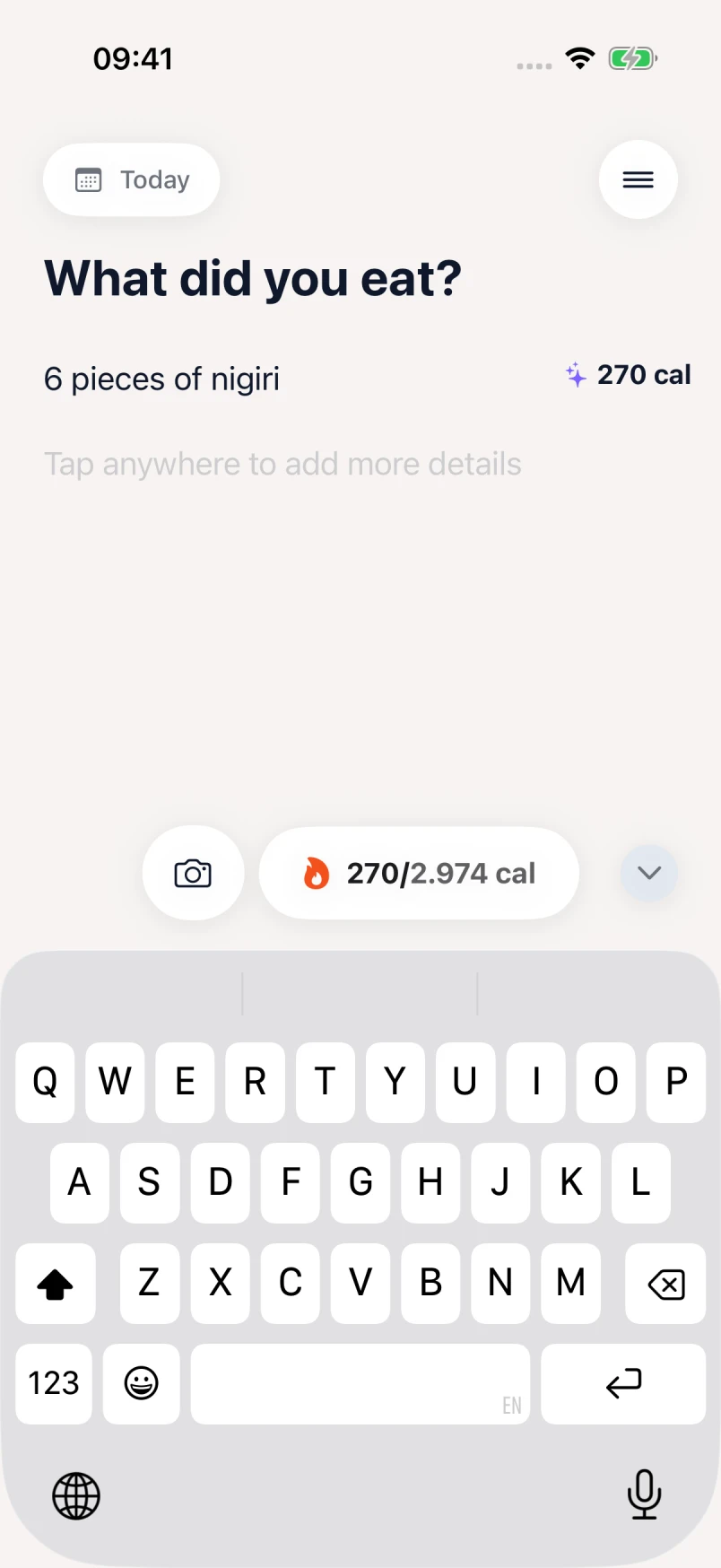
Write what you ate. CalFood estimates calories and macros, then keeps your daily totals in view.
Notify me at launchOpens an email to request the current iPhone link.
Keep reading
Another note for your food diary.
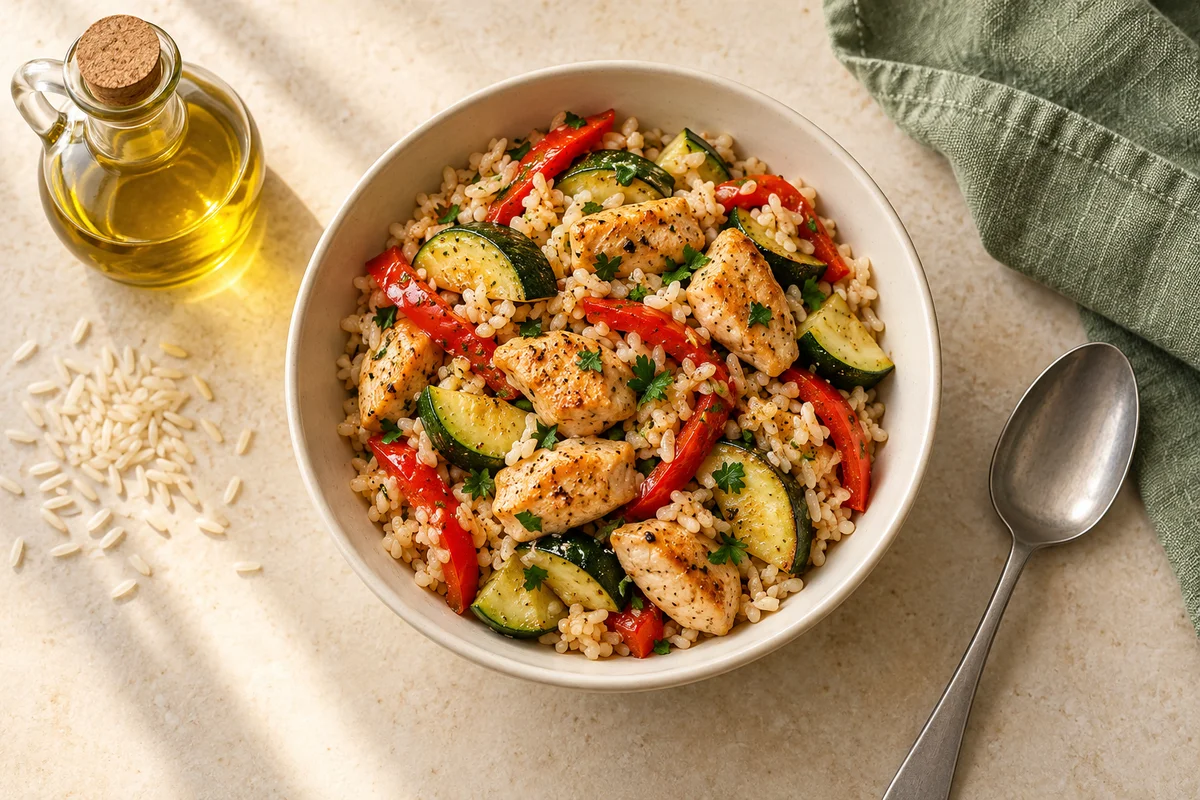
How to count calories in homemade food
One pan. Your portion. A clearer food log.