
Home cooking
How to count calories in homemade food
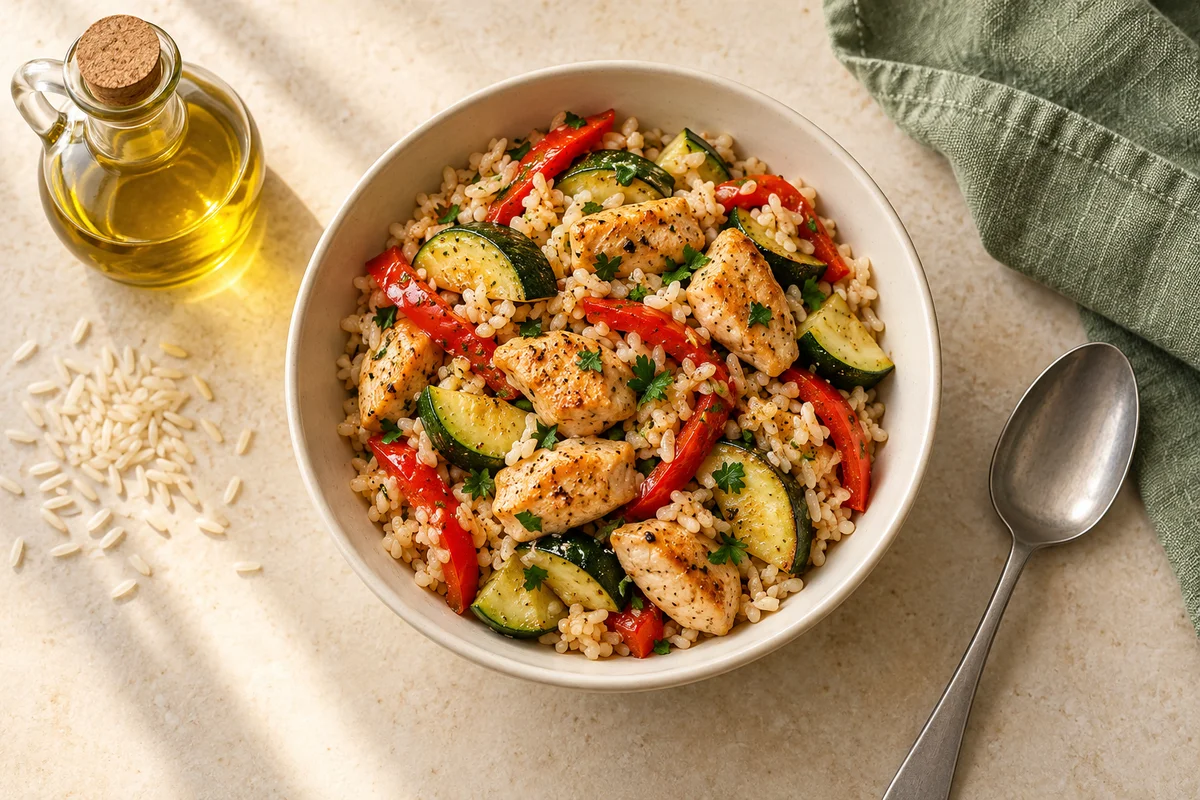
A pot of rice and chicken doesn’t come with a nutrition label. But you can still work out a useful calorie estimate without hunting for a database entry that happens to match your dinner.
The short answer
Add up the calories of the ingredients that go into the whole dish, including oil and sauces. Then multiply that total by the share you eat. Four equal servings means dividing by four; uneven portions need a little more information.
Start with the whole dish, not the name of the meal
“Chicken and rice” could describe a small bowl with steamed vegetables or a large plate cooked with butter and cream. A generic entry can’t tell you which version is on your stove.
Keep two separate questions in your food log: what went into the dish, and how much of that dish you ate. Answering the first question once gives you a starting point for every portion of the same batch.
Before cooking, note each ingredient and its amount. Use the package label where you have one; for an unpackaged ingredient, look for a matching food and preparation state in a reference such as USDA FoodData Central. Leave bones, packaging and other inedible parts out of the amount you record.
If a label gives calories per serving rather than per 100 g, scale from the serving amount shown. A label serving and the portion you choose to eat are different things. FDA reference.
A worked example: one pan of chicken and rice
Suppose you’re making a pan with dry rice, raw chicken, vegetables, sauce and oil. The figures below are illustrative amounts and example label values, chosen to make the arithmetic easy to follow. They aren’t a tested recipe, a prescribed meal, USDA food records or a CalFood analysis. Replace them with the values for your ingredients.
Scroll the table sideways to see every column.
| Ingredient | Amount | Example kcal / 100 g | Calories added |
|---|---|---|---|
| Rice, dry | 200 g | 360 | 720 kcal |
| Chicken, raw | 400 g | 120 | 480 kcal |
| Mixed vegetables | 300 g | 30 | 90 kcal |
| Sauce | 60 g | 50 | 30 kcal |
| Cooking oil | 20 g | 900 | 180 kcal |
| Whole pan | 1,500 kcal | ||
For each row, the calculation is grams used × calories per 100 g ÷ 100. So the rice contributes 200 × 360 ÷ 100 = 720 kcal. Add the rows only after calculating each ingredient.
This example assumes that all listed ingredients stay in the dish and that nothing else contributes calories. If you drain away fat, discard part of a sauce, or leave food in the pan, that assumption changes.
Divide the pan by the amount you actually eat
If the servings are equal
Divide the recipe total by the number of equal portions. In the example, four equal containers contain 1,500 ÷ 4 = 375 kcal each. Six equal containers would contain 250 kcal each.
The word “equal” does the work here. A large bowl and a small bowl don’t become the same portion because the recipe says “serves four.”
If the servings are different sizes
When you can weigh the finished food, divide its total calories by its cooked weight, without the pot. Then multiply by the weight on your plate.
For a second illustrative input, suppose the cooked dish weighs 1,200 g. That gives 1,500 ÷ 1,200 = 1.25 kcal per gram. A 350 g portion would contain 350 × 1.25 = 437.5 kcal, or about 438 kcal.
This method assumes the dish is mixed evenly. If your portion has most of the chicken and little rice, a share of the total weight won’t capture that difference. Record the components separately when you can.
If there’s no scale
Use the same ladle or container to divide a well-mixed batch, and record the fraction you eat. That’s a rougher estimate than a weighed portion. Our guide to tracking calories without weighing every meal shows how to make those unknowns visible.
Keep raw and cooked amounts separate
If you weigh rice dry, use a dry-rice nutrition entry. If you weigh it after cooking, use a cooked-rice entry. The same rule applies to meat and other ingredients: the state you measure should match the state in the label or food record.
A useful way to think about water is a pot of soup. Adding water increases its weight and volume without adding calories. The whole pot’s calorie total stays the same under that assumption, but a given weight of the diluted soup contains less of the original ingredients.
Cooking can also move fat, juices and ingredients into or out of the food you eat, so don’t assume every preparation only changes water. Write down what you keep and what you discard rather than applying a universal raw-to-cooked multiplier.
Keep the small extras in the calculation
Oil is easy to leave out because it disappears into a finished meal. In our example, omitting the oil would reduce the recorded total from 1,500 to 1,320 kcal. Split four ways, that’s a difference of 45 kcal per portion, created by one missing ingredient.
Include butter, marinades that stay in the dish, dressings, toppings and drinks. Add a topping to your own portion if everyone uses a different amount; putting it into the shared recipe would assign some to people who didn’t eat it.
A changed recipe needs a changed record. If you use a different sauce or double the rice next time, the old total no longer describes the new batch.
Turn the recipe into a useful meal note
A note can preserve the details that a dish name leaves out. For the example above, you could write:
Chicken and rice. Whole pan: 200 g dry rice, 400 g raw chicken, 300 g mixed vegetables, 60 g sauce and 20 g oil. I ate one quarter of the pan.
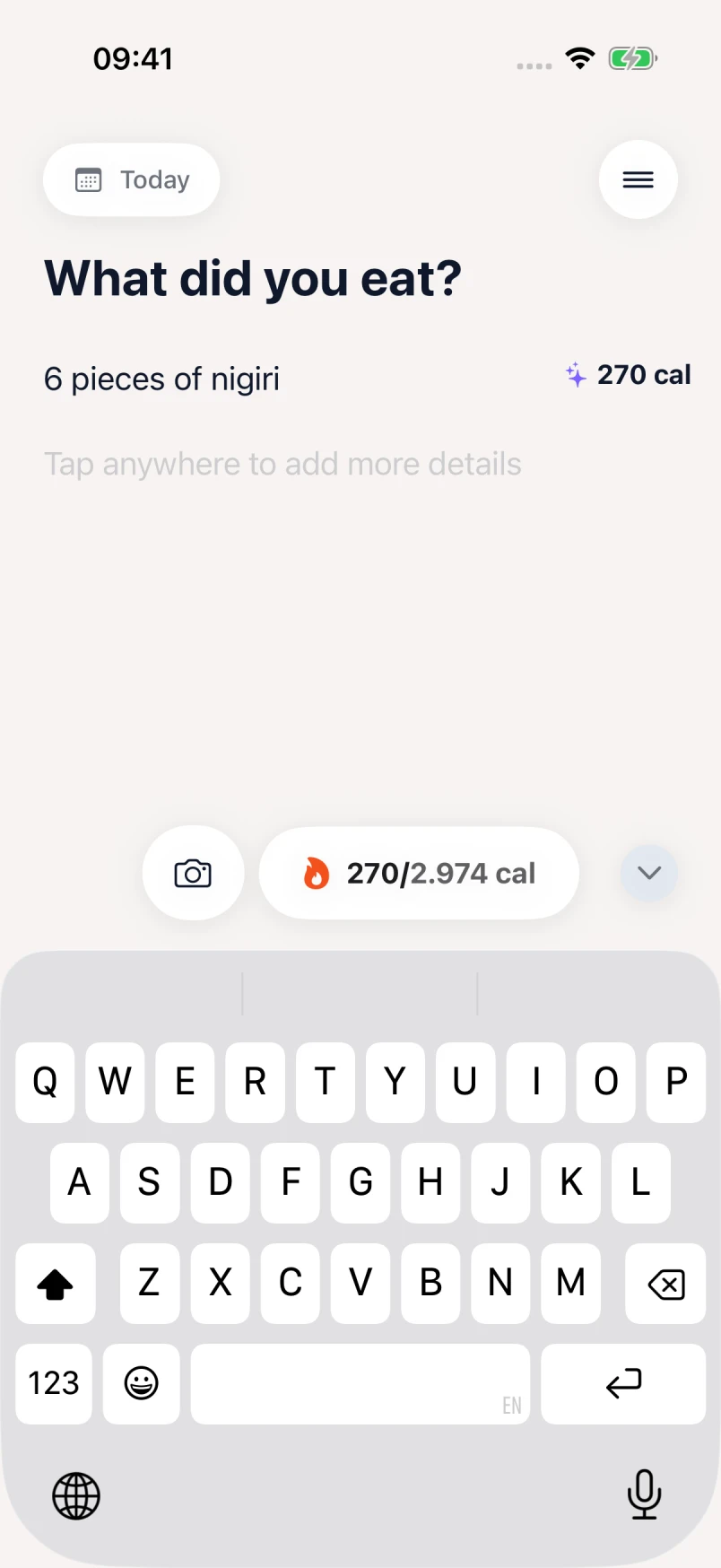
This is an example description, not a tested prompt or a promise of a particular app result. If you use CalFood to estimate the meal, review the food items and macro breakdown. An AI estimate may differ from your label-based calculation because it has to infer nutrition values and interpret your description.
The two methods answer different questions: ingredient arithmetic uses the values you supply; AI estimates fill in missing information. Read how CalFood handles meal estimates before treating an app number as a measurement.
Questions that come up in a real kitchen
Do spices need their own entry?
Use the quantity and label to decide. A small amount of seasoning and a sauce made with oil or sugar aren’t interchangeable. Include ingredients that contribute calories rather than deciding from the name alone.
What if someone else cooked the meal?
Ask about ingredients and portions if that’s practical. Otherwise record what you know and mark the rest as estimated. A precise-looking number can’t recover a recipe you don’t have.
Does a 375-calorie portion mean I should eat that amount?
No. That number belongs to this example’s arithmetic, not to a recommendation for your lunch. A food log records intake; individual nutrition needs require separate consideration.
Where do daily calorie targets fit in?
A meal estimate and a daily target are separate calculations. If you want to understand the latter, the maintenance calorie calculator explains its assumptions and limits. Neither the calculator nor this guide replaces advice from a qualified health professional.
Sources & editorial notes
Written by CalFood, the team building the app. The calculations and meal descriptions in this guide are educational examples; they don’t establish the nutritional content of your own food or validate an app’s accuracy.
- How to understand and use the Nutrition Facts label
U.S. Food and Drug Administration. Serving sizes, calories per serving, and scaling label values to the amount eaten.
- FoodData Central
USDA Agricultural Research Service. A reference for looking up food composition. The illustrative calorie values in this article are not taken from specific FoodData Central records.
- Food portions: choosing just enough for you
National Institute of Diabetes and Digestive and Kidney Diseases. The difference between a portion and a label serving, food records, and learning the sizes of familiar portions.
For personal nutrition or medical decisions, consult a qualified health professional. Found an error? Let us know so we can check the source and correct the guide.
A food diary, in your own words
Keep the meal.
And the details.
Write what you ate. CalFood estimates calories and macros, then keeps your daily totals in view.
Notify me at launchOpens an email to request the current iPhone link.
Keep reading
Another note for your food diary.

How to track calories without weighing every meal
No scale at lunch? Keep the useful details.